


In today’s fast-paced world, where technology evolves at an unprecedented rate, the demand for efficient, reliable energy storage solutions is at an all-time high. Among the myriad of options available, one powerhouse stands out for its exceptional capacity and versatility: the 180 Ah batteries. This formidable energy storage unit is increasingly becoming a go-to solution for a wide range of applications, from renewable energy systems to heavy-duty marine use. But what exactly makes the 180-Ah battery a game-changer in the realm of power storage?
Understanding the Basics of 180-Ah Batteries
To fully appreciate the value and utility of 180-Ah batteries, it’s essential to understand the concept of ampere-hours (Ah), which serves as a key metric in assessing battery capacity. The term ampere-hour denotes the amount of electric charge that can be delivered by a battery, calculated as the product of current flow in amperes and the duration of flow in hours.
Thus, a battery rated at 180-Ah can theoretically supply a current of 180 amperes for a solid hour, or a lesser current over a longer period. This capability underpins the battery’s suitability for a broad spectrum of applications that require substantial and sustained energy outputs.
It’s this fundamental understanding that illuminates why 180-Ah batteries are pivotal in sectors demanding high-capacity, reliable energy storage solutions. Engaging with these concepts is crucial for anyone looking to leverage the full potential of these power storage units in their specific context, whether it’s for renewable energy systems, marine applications, or emergency power backups.
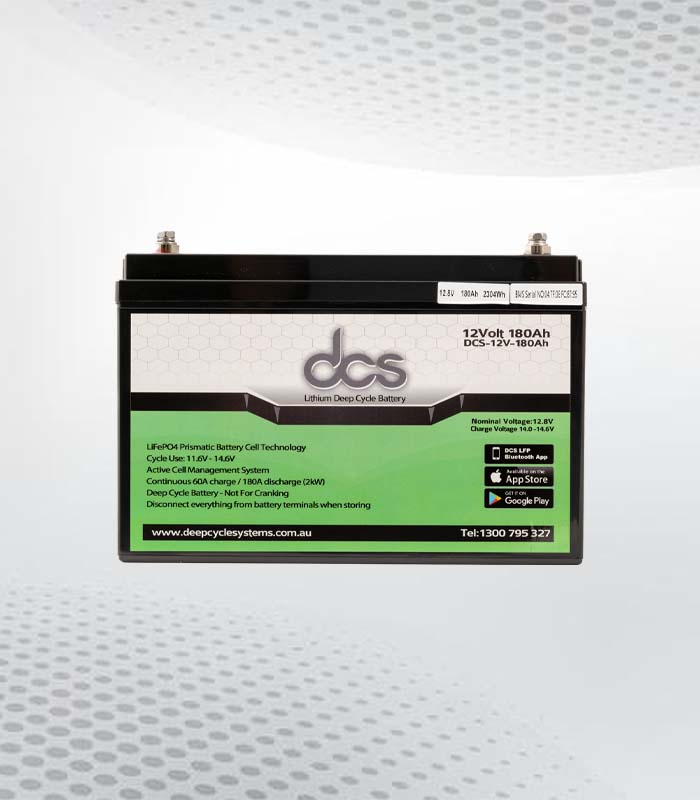 The Versatile Applications of Battery 180 Amp
The resilience and considerable capacity of Battery 180 Amp equips it for an array of applications across diverse sectors. These batteries find extensive use in renewable energy installations, such as solar panels and wind turbines, where their ability to store substantial amounts of energy proves invaluable.
Their robustness also makes them ideal for marine and recreational vehicle (RV) use, ensuring that essential systems remain operational even in the absence of a steady external power supply.
Additionally, emergency backup systems in critical infrastructure and healthcare facilities rely on the dependability of 180-Ah batteries to maintain operations during power disruptions.
Beyond these, the batteries serve pivotal roles in remote telecommunications, portable power stations, and large-scale event logistics, demonstrating their adaptability and essentiality in both every day and specialised contexts. Their broad applicability underscores the pivotal role 180 amp batteries plays in supporting and enhancing the efficiency of modern technological solutions.
Maximising the Lifespan of Your 180-Ah Battery
Ensuring the longevity of a 180-Ah battery requires adherence to a regimen of proper care and handling. One crucial practice is to maintain the battery within its optimal charge range, vigilantly preventing it from falling into a deeply discharged state, which can be detrimental over time. Utilisation of an intelligent charging system, capable of dynamically adjusting the charge according to the battery’s current state, plays a pivotal role in preventing the risks associated with overcharging and undercharging.
Such systems not only contribute to extending the battery’s useful life but also maintain its efficiency and performance levels. Additionally, keeping the battery in a clean, dry environment and regularly checking for any signs of wear or damage can preempt potential issues.
Avoiding exposure to extreme temperatures and ensuring the battery is not subjected to unnecessary strain or vibration will further safeguard its integrity. By observing these practices, users can significantly enhance the durability and reliability of their 180-Ah battery, ensuring it continues to provide dependable energy storage and power supply for its intended applications.
The Benefits of Choosing a 180 Amp Battery for Renewable Energy Systems
In the realm of renewable energy, the choice of a 180 Amp Battery stands out for its capability to effectively bridge the gap between energy generation and consumption demands. These batteries excel in capturing excess energy produced during peak production times, such as midday for solar panels or during strong wind conditions for turbines.
This stored energy is then available to be utilised during periods when energy generation is lower than the demand, such as at night or on days with little to no wind. Their substantial capacity ensures a steady supply of power, critical for maintaining the reliability of renewable energy systems.
Furthermore, their durability makes them well-suited to the cyclic nature of charging and discharging that characterises renewable energy storage, contributing to a more sustainable and efficient energy solution. Opting for a 180-Ah battery in renewable energy systems is not merely about choosing a power storage unit; it’s about investing in the stability and dependability of green energy solutions.
Navigating the Challenges and Solutions in Managing 180-Ah Batteries
Whilst 180-Ah batteries offer unparalleled power and versatility, their management necessitates a strategic approach to optimise performance and longevity. A paramount challenge is ensuring consistent, appropriate charging to avoid detrimental deep discharges or the risks posed by overcharging. Employing a sophisticated Battery Management System (BMS) is instrumental in this regard.
A BMS meticulously monitors the battery’s key metrics, such as voltage, current, and temperature, facilitating timely interventions to maintain optimal conditions. Regular maintenance checks are also essential, aimed at identifying and rectifying any signs of wear or potential faults before they escalate.
Additionally, understanding the specific requirements of your application helps in tailoring the management strategy, whether it involves adjusting the charging schedule based on usage patterns or incorporating additional protective measures against environmental factors. Embracing these solutions significantly mitigates the challenges associated with managing 180-Ah batteries, enabling users to harness their full potential effectively.
The Future of 180-Ah Batteries and Advancements in Technology
As the trajectory of battery technology propels forwards, the evolution of 180-Ah batteries is anticipated to be marked by groundbreaking improvements. Researchers and engineers are fervently working on integrating cutting-edge materials and innovative manufacturing techniques to amplify the capacities, enhance the efficiency, and trim down the environmental footprint of these batteries.
Amongst the promising advancements, the development of solid-state batteries stands out, promising to revolutionise the landscape by offering superior energy density and safety profiles compared to current lithium-ion based solutions. Similarly, advancements in graphene and silicon anodes are poised to significantly reduce charging times and improve cycle life, making 180-Ah batteries even more appealing for a wider array of applications.
Additionally, the focus on sustainability is driving efforts towards more recyclable and less toxic components, aligning with global environmental objectives. These advancements are not merely incremental; they herald a new era where the capabilities of 180-Ah batteries could be exponentially expanded, setting new benchmarks for what is achievable in the realms of power storage and management.
Comparing 180-Ah Batteries with Other Battery Capacities
Selecting the optimal battery capacity necessitates a thorough comparison, taking into account the unique requirements of each application.
Whilst the 180-Ah batteries is renowned for its substantial energy storage capacity, rendering it ideal for high-demand scenarios, alternative capacities might serve better under different circumstances. Smaller capacity batteries, for instance, could potentially meet the needs of less intensive applications, thereby offering advantages in terms of cost-efficiency and spatial economy.
On the other hand, scenarios with exceptionally high energy demands might call for batteries boasting capacities greater than 180-Ah. Such decisions hinge on a precise evaluation of energy needs, factoring in not only the peak demand but also considerations related to longevity and efficiency over time.
This approach ensures that one selects a battery not merely for its capacity but for its suitability to the task at hand, balancing performance with practical considerations such as installation space, weight limitations, and financial outlay. In essence, the process of selecting a battery capacity is a critical step, tailored to the specific contours of each application, striving for an optimal blend of efficiency, reliability, and sustainability.
Key Considerations before Investing in a 180-Amp Battery
When considering the purchase of a 180-amp battery, several crucial factors require close examination to determine its suitability for your needs.
Primary among these is defining the energy requirements of your intended application, which involves a comprehensive understanding of both peak and sustained energy consumption patterns. Additionally, ensuring compatibility with your current systems is vital; this includes not only the physical connections but also the operational dynamics, such as charge and discharge rates.
Spatial and weight constraints also play a significant role, particularly in environments where size and portability are critical. Given the substantial capacity of 180 amp batteries, they can be more cumbersome than their lower-capacity counterparts, requiring careful planning to accommodate them. Lastly, the financial aspect cannot be overlooked.
While the initial cost for a battery of this quality may be higher than for smaller units, the long-term benefits, such as reduced maintenance and longer lifespan, may offset the initial costs. Evaluating these elements together will enable a well-informed decision, ensuring that the battery you choose not only meets but potentially exceeds your energy storage and power supply expectations.
The Power of 180-Ah Batteries for Marine Environments
In the demanding world of marine exploration and recreation, the integrity and reliability of power sources are paramount. The 180-Ah battery emerges as a beacon of strength in these settings, offering unparalleled endurance and performance to a plethora of onboard systems.
Its formidable capacity ensures that crucial equipment, ranging from sophisticated navigational aids to vital communication tools, and even the luxury of electric propulsion, are kept functioning seamlessly over extended voyages.
What sets these batteries apart in marine applications is not just their ability to deliver sustained power but also their resilience against the adversities of marine environments. Engineered to resist corrosion, withstand vibrations, and cope with fluctuations in temperature and humidity, these batteries stand as a testament to durability.
They are not merely energy sources; they are steadfast companions in the unpredictable realm of the seas, enabling mariners to navigate with confidence and security. This robustness, coupled with their impressive energy storage capability, marks 180-Ah batteries as indispensable allies in the quest for reliability and autonomy on the waters.
180-Ah vs. 180 Amp Batteries: What’s the Difference?
The distinction between “180-Ah” and “180 amp” often leads to confusion, yet understanding this is pivotal for anyone delving into the realm of batteries. The term “Ah” stands for ampere-hours, signifying the battery’s capacity to store and deliver electric charge over time.
Specifically, a 180-Ah battery can discharge a current of 180 amperes for one hour, or a proportionate current for a different duration. On the other hand, “amp”, short for ampere, is a unit of electric current, not directly indicative of the storage capacity but rather the flow of electricity at any given moment.
It is critical to grasp this nuance to accurately assess a battery’s suitability for your needs, ensuring you make choices based on how long a battery will last under specific conditions rather than the immediate strength of the electric current it can provide. This clarification aids in navigating the specifications of batteries, ensuring informed decisions are made for energy storage and management in various applications.
FAQs
Here we address three frequently asked questions regarding 180-Ah batteries, shedding light on common enquiries.
1. Can I use a 180-Ah battery for off-grid living?
Yes, 180-Ah batteries are highly suitable for off-grid applications due to their significant energy storage capacity. They can store ample power from solar panels or wind turbines, making them ideal for ensuring a steady power supply in remote locations without access to the main electrical grid.
2. How long can a 180-Ah battery last on a single charge?
The duration a 180-Ah battery will last depends on the energy consumption of the devices it powers. For instance, if you have a setup that draws 10 amps continuously, a fully charged 180-Ah battery could theoretically last for 18 hours. However, real-world conditions and battery efficiency play a crucial role in actual performance.
3. Is it necessary to use a specific charger for my 180-Ah battery?
It is crucial to use a charger that is compatible with the specifications of your 180-Ah battery, particularly one that matches the battery’s chemistry type (e.g., lead-acid, lithium-ion). An appropriate charger ensures optimal charging, prolongs the battery’s lifespan, and maintains its performance by preventing overcharging or undercharging.
Conclusion
180-Ah batteries emerge as a cornerstone in the architecture of modern energy storage and power supply solutions. Its substantial capacity, allied with its versatility across a spectrum of applications, underscores its value in today’s energy-centric world. Understanding its operation, alongside the considerations necessary for its optimal use and maintenance, empowers users to leverage its full potential, thereby contributing to more efficient, reliable, and sustainable energy practices. As technology marches forward, the future of 180-Ah batteries appears bright, with ongoing advancements poised to enhance their efficiency, reduce their environmental impact, and expand their applicability.
| Related Business Listings |
| Directory Submissions |
| Regional Directory |